VAP DIGITAL BOOKSHELF - DRUMMING
VAP Digital Bookshelf: Premium Digital Archives
Every VAP Digital Bookshelf edition represents the highest standard in digital preservation. Our books are meticulously scanned at 600 DPI resolution, ensuring crisp, detailed reproductions that capture every nuance of the original text.
Advanced Digital Processing: Each page undergoes professional enhancement through our comprehensive digitization process:
Rare and Exclusive Content: Our collection features many volumes that have been out of print for decades and are unavailable through traditional channels. These carefully curated digital editions often represent the only accessible copies of historically significant works.
Authentic Digital Experience: By maintaining original layouts, typography, and formatting, VAP Digital Bookshelf editions provide scholars, researchers, and enthusiasts with the most faithful digital reproductions available.
For complete specifications and purchasing information, click "Learn More & Purchase."
Every VAP Digital Bookshelf edition represents the highest standard in digital preservation. Our books are meticulously scanned at 600 DPI resolution, ensuring crisp, detailed reproductions that capture every nuance of the original text.
Advanced Digital Processing: Each page undergoes professional enhancement through our comprehensive digitization process:
- *Precision straightening to correct any scanning irregularities
- *State-of-the-art OCR technology that makes entire texts fully searchable
- *Native language optimization - German texts remain searchable in German, Italian texts in Italian, preserving linguistic authenticity
- *Original formatting preservation to maintain the authentic reading experience
Rare and Exclusive Content: Our collection features many volumes that have been out of print for decades and are unavailable through traditional channels. These carefully curated digital editions often represent the only accessible copies of historically significant works.
Authentic Digital Experience: By maintaining original layouts, typography, and formatting, VAP Digital Bookshelf editions provide scholars, researchers, and enthusiasts with the most faithful digital reproductions available.
For complete specifications and purchasing information, click "Learn More & Purchase."
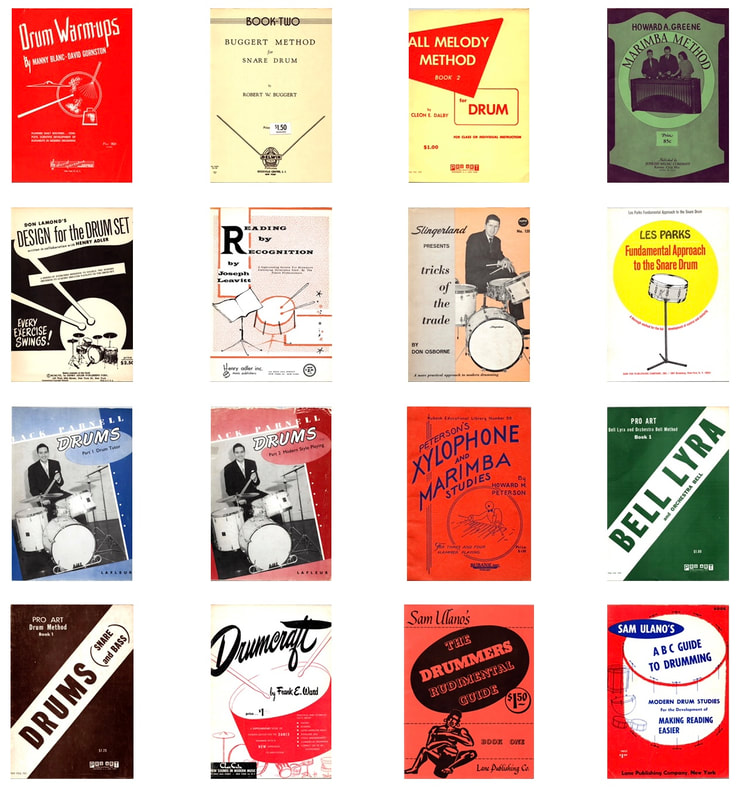
THE LUYBEN COLLECTION
The Luyben Collection is a package of 16 hard-to-find and now out-of-print method books dating from the middle of the 1900s.
These titles are a wonderful collection for those interested in the history of drumming, drum methodology, and pedagogy.
HARRY A. BOWER
IMPERIAL METHOD FOR THE DRUM
Henry A. Bower begins the title page of his Imperial Method with the following statement: “A full Course of Instruction, Progressive Studies, a concise explanation of the Rudiments of Music, together with a varied collection of Choice Pieces, Operatic and Favorite Melodies, Solos, etc. etc.”
First published by The John Church Company in 1898, at a time when percussion instruction was largely centered on rudimental drumming, Bower broadened the scope of percussion pedagogy by incorporating keyboard percussion and timpani into his method. This marked a significant departure from traditional military-style training, shifting the focus toward the demands of orchestral and theatrical performance.
Bower's Imperial Method represents more than instruction—it embodies the vision of a complete musical innovator who saw percussion not as it was, but as it could become.
First published by The John Church Company in 1898, at a time when percussion instruction was largely centered on rudimental drumming, Bower broadened the scope of percussion pedagogy by incorporating keyboard percussion and timpani into his method. This marked a significant departure from traditional military-style training, shifting the focus toward the demands of orchestral and theatrical performance.
Bower's Imperial Method represents more than instruction—it embodies the vision of a complete musical innovator who saw percussion not as it was, but as it could become.
O.F. ROMINGER
THE ROMINGER DRUM METHOD
This book occupies a fascinating position in drumming literature, capturing a pivotal moment in percussion history. While it addresses the core elements of modern drumming—snare, bass, and cymbals—it approaches them through the lens of double drumming rather than integrated drum set technique.
Published in the early 1930s, the work serves as a historical bridge between two eras. It documents the final chapter of traditional military and orchestral percussion practices while standing at the threshold of the drum set revolution that would fundamentally transform popular music. This timing makes it an invaluable snapshot of drumming in transition —a moment when musicians were beginning to consolidate multiple percussion instruments into a single player's domain, yet still operated within established classical traditions.
ROBERT KIETZER
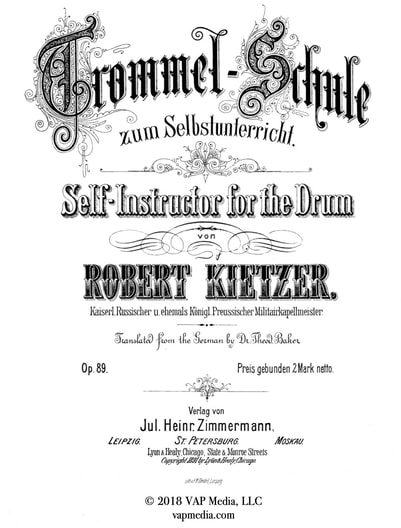
SELF-INSTRUCTOR FOR THE DRUM
Written in 1894, Robert Kietzer's Self-Instructor for the Drum was one of the very first instruction manuals for the snare drum that was NOT based on military drumming. This makes it a groundbreaking publication in the history of percussion education, as it marked a departure from the military-focused drum instruction that had dominated the field.
In addition to technical exercises that focus on rolls, there are a number of exercises in a variety of musical styles.This approach was innovative for its time, moving beyond purely military applications to encompass broader musical contexts.
This work stands as a significant milestone in drumming education, representing one of the earliest attempts to create a civilian-oriented, comprehensive self-instruction method for the snare drum.
In addition to technical exercises that focus on rolls, there are a number of exercises in a variety of musical styles.This approach was innovative for its time, moving beyond purely military applications to encompass broader musical contexts.
This work stands as a significant milestone in drumming education, representing one of the earliest attempts to create a civilian-oriented, comprehensive self-instruction method for the snare drum.
HARRY A. BOWER
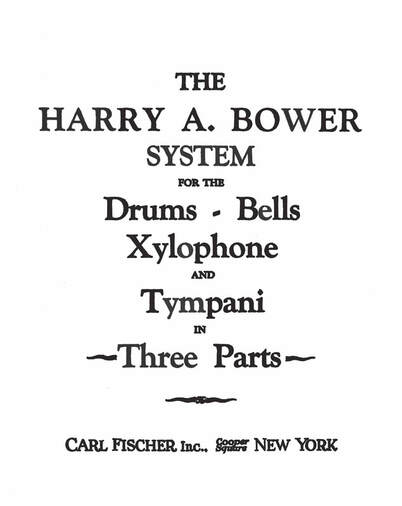
THE HARRY A. BOWER SYSTEM IN THREE PARTS
The Harry A. Bower System is one of the most significant and influential percussion method books in American music education history. This method represents a major advancement over Bower's earlier 1898 "Imperial Method." Harry Bower was famous in the late 19th and early 20th century as a percussion artist and producer of snare drums, making him uniquely qualified to create this comprehensive educational system.
The Bower System became a cornerstone of American percussion education and influenced generations of drummers. It was among the first methods to systematically address multiple percussion instruments in a coordinated educational approach, rather than treating each instrument separately.
CARL E. GARDNER
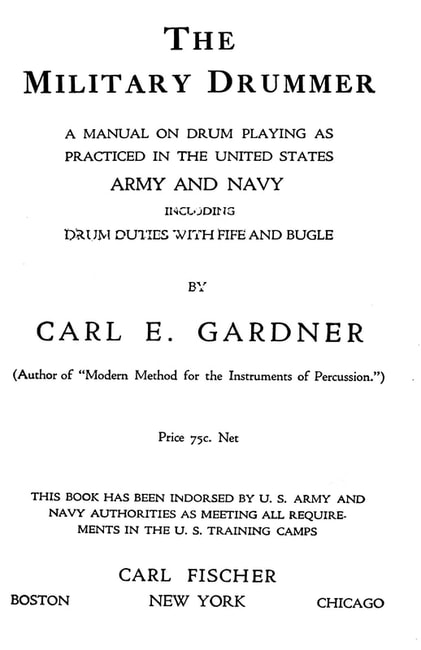
THE MILITARY DRUMMER
The Military Drummer by Carl E. Gardner represents a comprehensive instructional manual specifically designed for military percussion performance as practiced in the United States Army and Navy during World War I. Published in 1918, this method book emerged during a critical period when standardized military drumming techniques were essential for effective military communication and ceremonial functions.
The Military Drummer includes information on the Rudiments of Music, Choice and Care of the Drum, Head Tucking, The Sticks, Position of the Drummer, and the Rudiments of Drumming. The book also includes a large number of exercises and tunes for both the fife and drum, and bugle and drum.
The manual represents the codification of military drumming traditions that had evolved through the Civil War and Spanish-American War periods, presenting them in a systematic educational format suitable for widespread military training programs.
The Military Drummer includes information on the Rudiments of Music, Choice and Care of the Drum, Head Tucking, The Sticks, Position of the Drummer, and the Rudiments of Drumming. The book also includes a large number of exercises and tunes for both the fife and drum, and bugle and drum.
The manual represents the codification of military drumming traditions that had evolved through the Civil War and Spanish-American War periods, presenting them in a systematic educational format suitable for widespread military training programs.
ROBERT BUGGERT
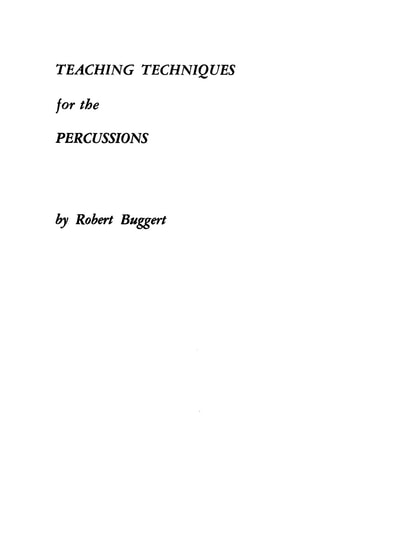
TEACHING TECHNIQUES FOR THE PERCUSSIONS
Teaching Techniques for the Percussions by Robert William Buggert represents a significant contribution to percussion pedagogy literature from the mid-20th century. This instructional work addresses the specialized teaching methods and approaches necessary for effective percussion education, distinguishing it from performance-focused method books by concentrating specifically on pedagogical strategies for percussion instructors.
The book represents the transition from percussion education based primarily on military drumming traditions to comprehensive instrumental education that encompassed the full range of percussion instruments becoming standard in American schools and professional ensembles during the mid-20th century.
GOVERNMENT PRINTING OFFICE
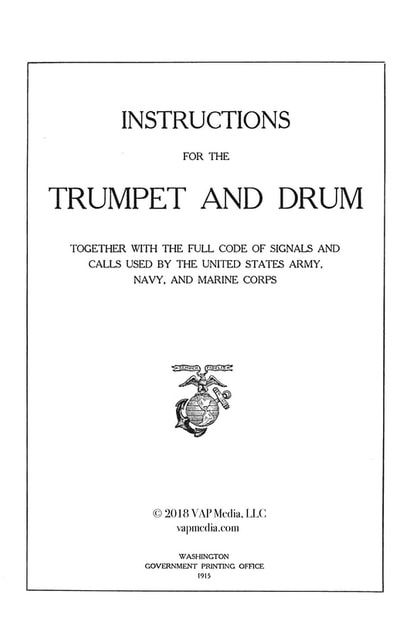
INSTRUCTIONS FOR THE TRUMPET AND DRUM
This is an official U.S. military manual with the full title "Instructions for the Trumpet and Drum: Together with the Full Code of Signals and Calls Used by the United States Army, Navy and Marine Corps". It was published in 1915 by the Government Printing Office in Washington.
Published in 1915, just before America's entry into World War I, this manual represents the standardized military musical communication system used during a critical period in American military history. This book is described as "a MUST HAVE for anyone interested in historic military music" due to its comprehensive coverage of official military musical protocols.
This book is invaluable for military historians, music researchers, and those studying the evolution of military protocols and traditions.
Published in 1915, just before America's entry into World War I, this manual represents the standardized military musical communication system used during a critical period in American military history. This book is described as "a MUST HAVE for anyone interested in historic military music" due to its comprehensive coverage of official military musical protocols.
This book is invaluable for military historians, music researchers, and those studying the evolution of military protocols and traditions.
OLIVER DITSON (Publisher)
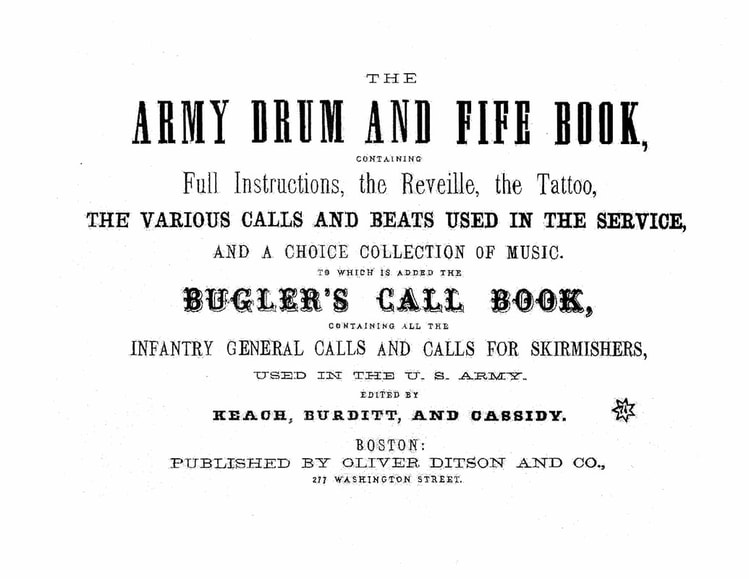
THE ARMY DRUM AND FIFE BOOK
The Army Drum and Fife Book was published in 1861 by Oliver Ditson and Co. in Boston was edited by Keach, Burditt, and Cassidy.
This military instruction manual contains the proper patterns for playing various military calls including "Hail To The Chief," the "Quick Retreat," and the "Water Call". The book also includes "the Bugler's Call Book, containing all the Infantry General Calls and Calls for Skirmishers, used in the U.S. Army".
The book was published during the Civil War era (1861), making it a significant historical resource for understanding military music practices of that time period. It's also known as "The Modern Drum School".
This military instruction manual contains the proper patterns for playing various military calls including "Hail To The Chief," the "Quick Retreat," and the "Water Call". The book also includes "the Bugler's Call Book, containing all the Infantry General Calls and Calls for Skirmishers, used in the U.S. Army".
The book was published during the Civil War era (1861), making it a significant historical resource for understanding military music practices of that time period. It's also known as "The Modern Drum School".