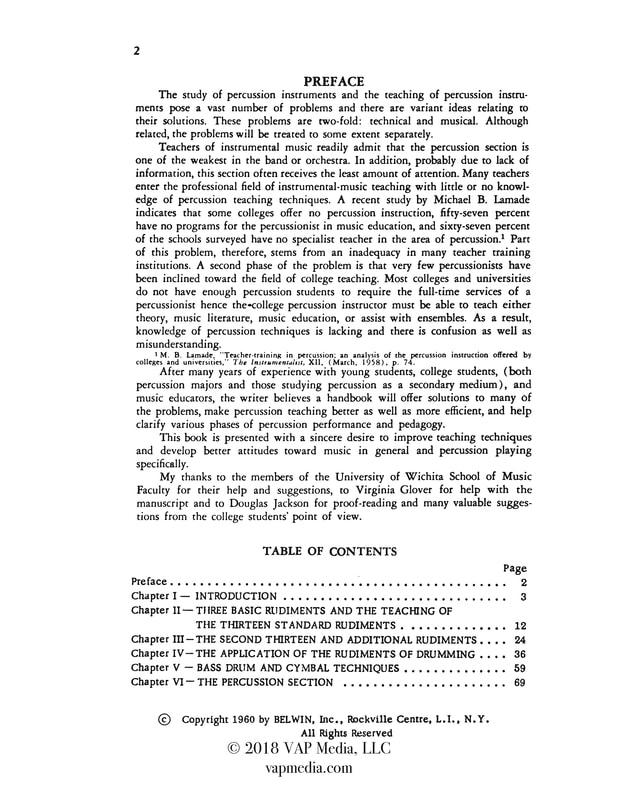
Robert Buggert Teaching Techniques for the Percussions
Teaching Techniques for the Percussions by Robert William Buggert represents a significant contribution to percussion pedagogy literature from the mid-20th century. This instructional work addresses the specialized teaching methods and approaches necessary for effective percussion education, distinguishing it from performance-focused method books by concentrating specifically on pedagogical strategies for percussion instructors.
The book reflects the growing sophistication of percussion education during the post-World War II period, when percussion sections in school bands, orchestras, and ensembles were expanding rapidly, creating a need for specialized teaching methodologies that could address the unique challenges of percussion instruction.
Robert William Buggert (1918-2021) was an American composer, educator, and percussionist whose career spanned multiple decades of the 20th century. Buggert's diverse musical interests extended beyond percussion, as evidenced by his scholarly work "Alberto Da Ripa: Lutenist and Composer" and his composition "Introduction and fugue: 11 players", demonstrating his broad musical knowledge and compositional abilities that informed his percussion teaching methodology.
This work emerged during a crucial period in American music education when percussion sections were becoming increasingly sophisticated and integral to school music programs. The post-war expansion of school music programs created unprecedented demand for qualified percussion instructors and effective teaching methodologies.
Buggert's focus on teaching techniques rather than performance methods reflects the maturation of percussion as an academic discipline, requiring specialized pedagogical approaches distinct from other instrumental areas. This represents an important evolution in percussion education literature.
The book represents the transition from percussion education based primarily on military drumming traditions to comprehensive instrumental education that encompassed the full range of percussion instruments becoming standard in American schools and professional ensembles during the mid-20th century.
The work provides insight into the pedagogical challenges and solutions developed during the formative period of modern American percussion education.