- VAP Digital Bookshelf RESEARCH
- >
- Peinkofer & Tannigel - Handbook of Percussion Instruments
Peinkofer & Tannigel - Handbook of Percussion Instruments
SKU:
VAP 4100
$24.95
$24.95
Unavailable
per item
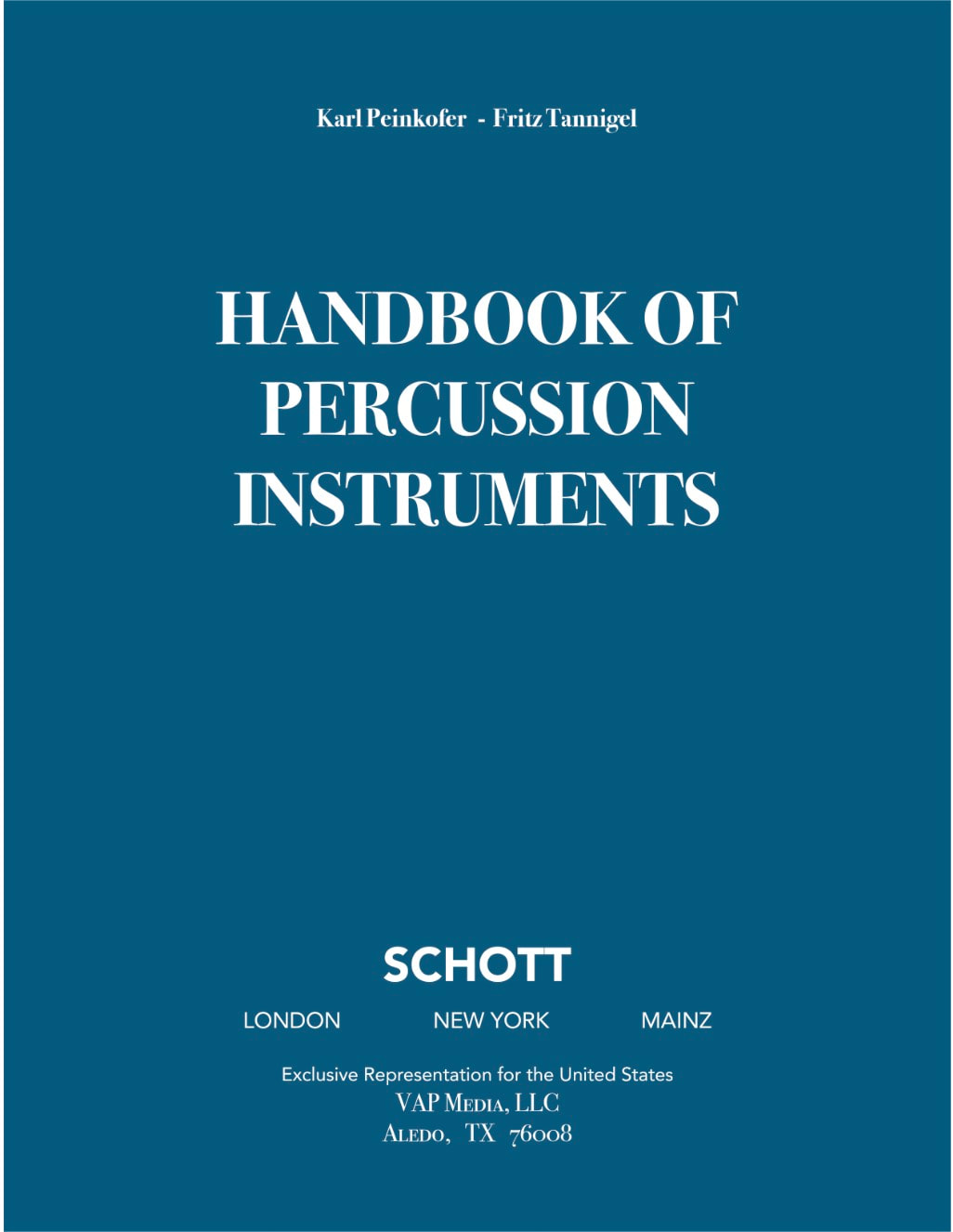
When Karl Peinkofer and Fritz Tannigel published their Handbook of Percussion Instruments in 1969, critics declared it "20 years ahead of its time." Seven years later, when Kurt and Else Stone's English translation appeared in 1976, the assessment remained unchanged—the Handbook was still decades ahead of the field. More than half a century later, this remarkable work continues to stand alone as an unparalleled resource for percussion knowledge.
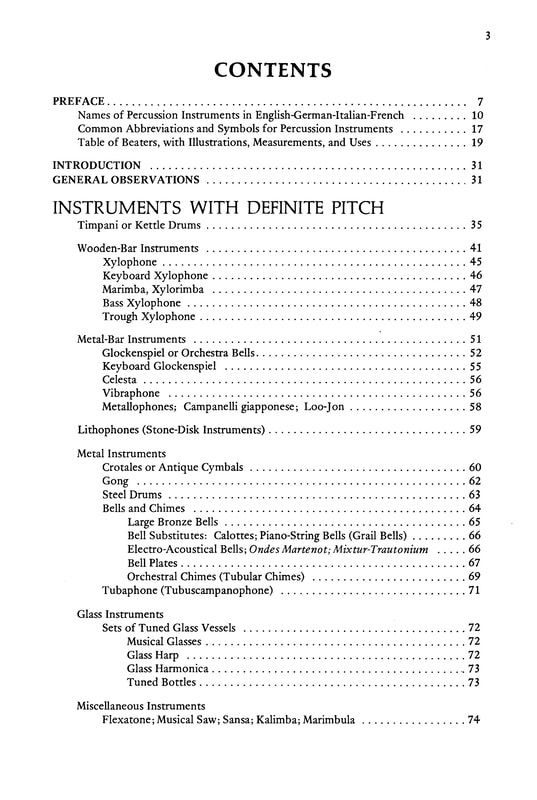
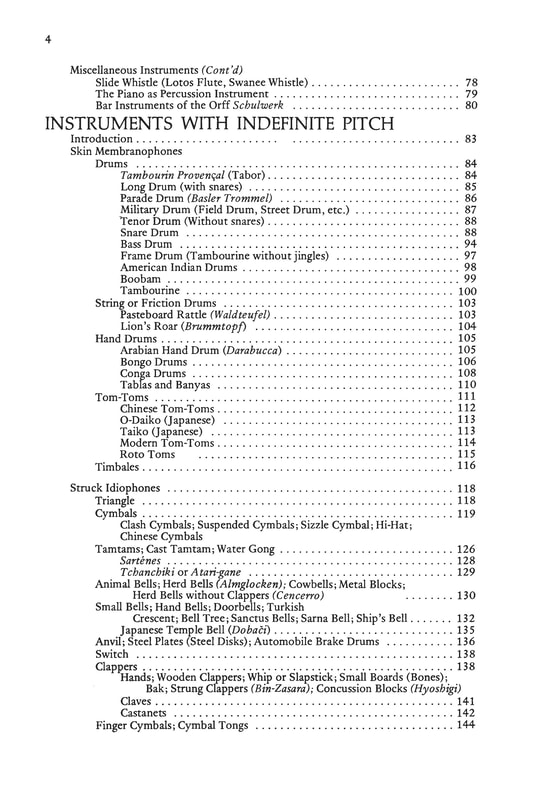
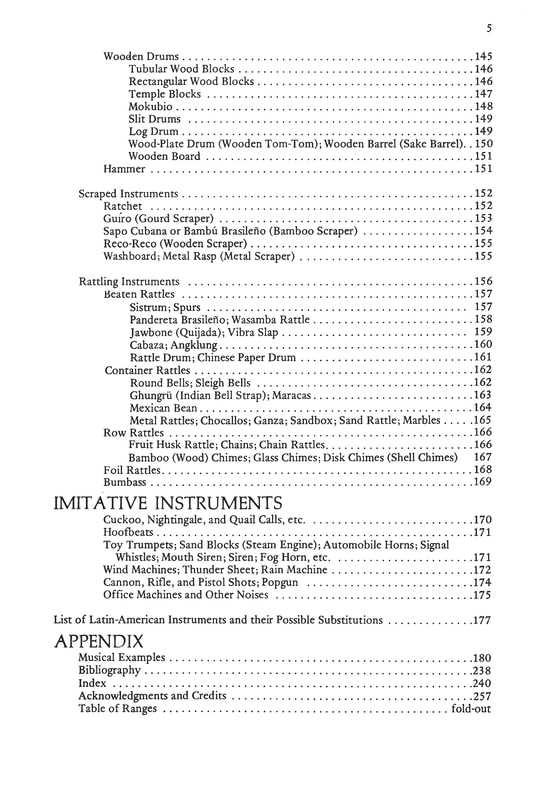
What makes the Handbook extraordinary? It offers an extensive four-language dictionary of percussion terms (English, German, Italian, and French), comprehensive photos and descriptions of mallets, sticks, and beaters, detailed coverage of hundreds of instruments ranging from common to obscure, and over 80 pages of musical examples from the most influential 20th-century compositions. This isn't just a reference book—it's a window into how composers approach percussion writing and what happens when they venture into uncharted orchestrational territory.
After being out of print for far too long, VAP Media is proud to serve as the USA distributor for the digital edition. Like all VAP Media Digital Library titles, this edition has been meticulously scanned at high resolution, with pages straightened and cleaned, then processed through advanced optical character recognition software to ensure full text searchability.
The Handbook of Percussion Instruments by Karl Peinkofer and Fritz Tannigel is considered a seminal work in percussion literature. Here's what makes it significant:
Historical Context and Impact
The book was originally published in German in 1969, during a time when comprehensive percussion resources were scarce. The book was described as being "20 years ahead of its time" when it first appeared, and remarkably maintained that distinction even after its English translation by Kurt and Else Stone in 1976.
Content and Scope
The handbook provides "a comprehensive survey of the entire arsenal of percussion resources" and covers "classification of the instruments into basic groups; detailed descriptions of the construction of each instrument including many Latin-American, Afro-American, and East-Asian instruments; a brief tracing of the origin and history of each instrument; the ranges of all pitched instruments; the most commonly used beaters, etc."
The book includes:
· An extensive four-language dictionary of percussion terms (English, German, Italian, French)
· Detailed photos and descriptions of mallets, sticks, and beaters
· Coverage of hundreds of instruments from common to esoteric
· Over 80 pages of musical score examples from influential 20th-century compositions
Legacy and Influence
The Handbook has been particularly influential in academic and professional percussion circles. It served as one of the main sources for the Encyclopedia of Percussion, indicating its standing as an authoritative reference. The translators, Kurt and Else Stone, were notable figures in music publishing - Kurt Stone was a respected music editor and scholar who worked with major publishers and wrote extensively on contemporary music notation.
The book's enduring relevance speaks to how thoroughly and thoughtfully Peinkofer and Tannigel approached their subject matter, creating a resource that continues to be valuable for percussionists, composers, and music educators decades after its publication.
What makes the Handbook extraordinary? It offers an extensive four-language dictionary of percussion terms (English, German, Italian, and French), comprehensive photos and descriptions of mallets, sticks, and beaters, detailed coverage of hundreds of instruments ranging from common to obscure, and over 80 pages of musical examples from the most influential 20th-century compositions. This isn't just a reference book—it's a window into how composers approach percussion writing and what happens when they venture into uncharted orchestrational territory.
After being out of print for far too long, VAP Media is proud to serve as the USA distributor for the digital edition. Like all VAP Media Digital Library titles, this edition has been meticulously scanned at high resolution, with pages straightened and cleaned, then processed through advanced optical character recognition software to ensure full text searchability.
The Handbook of Percussion Instruments by Karl Peinkofer and Fritz Tannigel is considered a seminal work in percussion literature. Here's what makes it significant:
Historical Context and Impact
The book was originally published in German in 1969, during a time when comprehensive percussion resources were scarce. The book was described as being "20 years ahead of its time" when it first appeared, and remarkably maintained that distinction even after its English translation by Kurt and Else Stone in 1976.
Content and Scope
The handbook provides "a comprehensive survey of the entire arsenal of percussion resources" and covers "classification of the instruments into basic groups; detailed descriptions of the construction of each instrument including many Latin-American, Afro-American, and East-Asian instruments; a brief tracing of the origin and history of each instrument; the ranges of all pitched instruments; the most commonly used beaters, etc."
The book includes:
· An extensive four-language dictionary of percussion terms (English, German, Italian, French)
· Detailed photos and descriptions of mallets, sticks, and beaters
· Coverage of hundreds of instruments from common to esoteric
· Over 80 pages of musical score examples from influential 20th-century compositions
Legacy and Influence
The Handbook has been particularly influential in academic and professional percussion circles. It served as one of the main sources for the Encyclopedia of Percussion, indicating its standing as an authoritative reference. The translators, Kurt and Else Stone, were notable figures in music publishing - Kurt Stone was a respected music editor and scholar who worked with major publishers and wrote extensively on contemporary music notation.
The book's enduring relevance speaks to how thoroughly and thoughtfully Peinkofer and Tannigel approached their subject matter, creating a resource that continues to be valuable for percussionists, composers, and music educators decades after its publication.